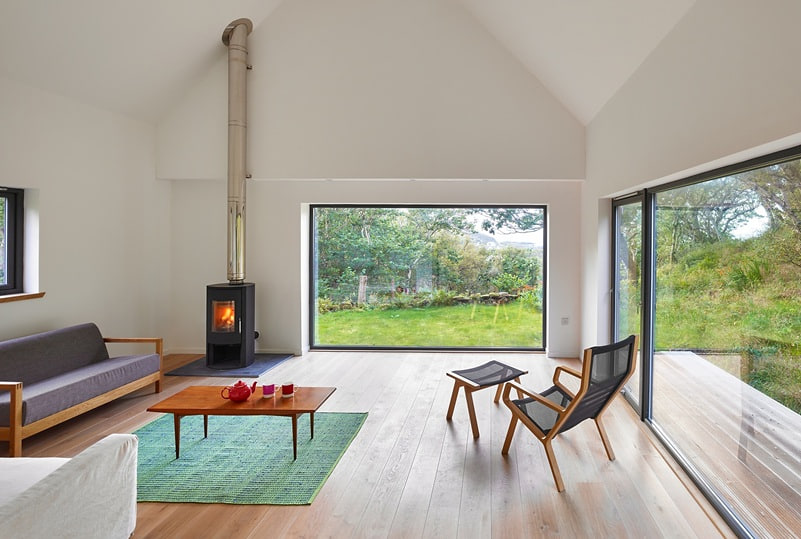
Our superstructure is timber supplied through Donaldson Timber Systems with FSC/PEFC chain-of-custody. Timber is renewable, locks up biogenic carbon, and carries a far lower embodied footprint than heavy, high-energy materials. It also creates interiors that feel warm, tactile and connected to landscape.
CPS cavities are filled with recycled glass-wool (mineral-based, hydrophobic). It is inert and non-toxic, does not off-gas harmful chemicals, and is recyclable at end-of-life. Thermally, it delivers excellent U-values; acoustically, it helps make rooms quieter and calmer—key to everyday wellbeing.
Airtight fabric works best with intelligent ventilation. MVHR continuously supplies fresh, filtered air, extracts moisture and pollutants, and recovers heat from outgoing air to reduce energy use. The result is stable humidity, fewer allergens, less condensation and mould risk, and better sleep.
Our sister company Dualchas Architects shapes HebHomes with clarity and calm: generous daylight, framed views, and simple, flexible plans that balance sociable spaces with private retreat. Good architecture reduces stress, improves mood and creates homes that people value—and care for.
True sustainability is whole-life. When a house is well made and well loved, it is maintained, adapted and kept—avoiding the carbon and waste of premature replacement. CPS off-site manufacture also reduces construction waste and shortens time on site.
Natural, responsibly sourced timber; non-toxic recycled glass-wool insulation; and MVHR for clean, filtered air—combined with daylight-rich plans by Dualchas. The fabric, services and design all contribute to comfort, quietness and good air quality.
Through Donaldson Timber Systems with FSC/PEFC chain-of-custody. Responsible forestry means traceability, renewability and lower embodied impact than many conventional alternatives.
Yes. Our recycled glass-wool is mineral-based, inert and non-toxic. It does not off-gas harmful chemicals and offers excellent thermal and acoustic performance.
MVHR constantly introduces filtered fresh air while removing moist, stale air—reducing mould risk and allergens. Heat recovery keeps temperatures stable and energy use low.
We follow similar principles—airtight fabric, high insulation, thermal-bridge control, MVHR—without formal certification to avoid additional cost and complexity. Performance and comfort remain the goal.
Many are standard in CPS. Over time, better fabric and ventilation lower energy costs and reduce maintenance—improving whole-life value.
Yes. Recycled glass-wool and careful detailing provide strong acoustic performance, making interiors calmer for work, rest and sleep.
We can specify low-VOC paints, adhesives and sealants and advise on healthy product choices during specification to further improve indoor air quality.
Daylight, views, room proportions and flow all affect stress, sleep and mood. Dualchas’ approach emphasises simplicity, outlook and connection to nature—proven influences on wellbeing.
Yes—orientation-led glazing, external shading where appropriate, solar-control glass, MVHR summer bypass and night-purge strategies to keep spaces comfortable as the climate warms.
Timber stores carbon; off-site CPS reduces waste; recycled insulation lowers embodied impacts. Loved, durable architecture stays in use longer—dramatically improving whole-life outcomes.
See our Technical Info for typical U-values/airtightness and services, plus approvals (BOPAS/BBA) and any available EPDs. We’re building post-occupancy case studies to share real-world outcomes.