
CPS
Choose around the insulation you want, the access your site allows and the full cost of erection.
A key reason to choose CPS is its blown glass-wool insulation: it avoids the rigid foam insulation used in SIP wall construction. CPS also reduces the work remaining on site through factory preparation.
The trade-off is access and lifting. CPS requires a crane, which can add plant costs. Our lighter SIP panels can be a practical alternative for restricted or remote sites.
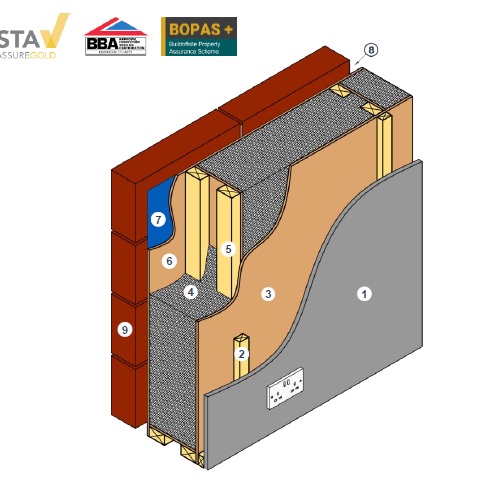
CPSBlown glass-wool insulation within the timber frame. The option for clients wanting to avoid PIR/PUR rigid foam in this wall system.
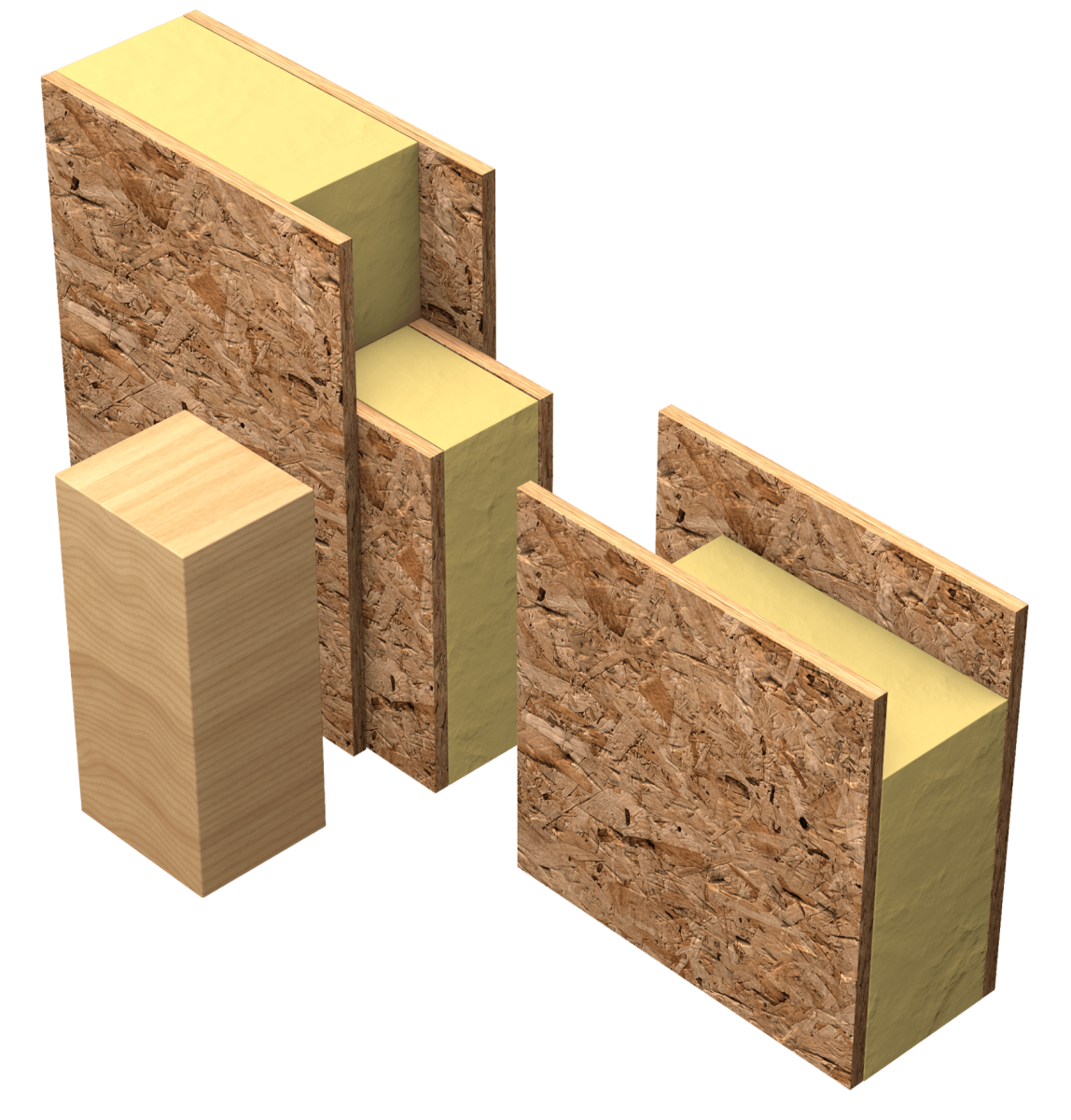
SIPRigid polyurethane (PUR) foam forms the panel core. Our wall build-up also includes additional insulated lining.
CPSTypical published wall U-value: around 0.13–0.15 W/m²K, without additional insulated plasterboard.
SIPOur published example wall build-up achieves around 0.16 W/m²K with the additional insulated lining.
CPSRequires a crane and suitable delivery access, plus space and ground conditions for its setup and operation.
SIPLighter panels can suit more restricted or remote sites. Delivery access and the lifting method still need checking.
CPSThe crane and any access or ground preparation can increase plant and site costs. Include these when comparing the options.
SIPLower lifting demands may reduce plant costs on some sites. Compare the complete erection arrangements, not the panel price alone.
CPSFactory insulation, membranes and service-zone preparation reduce the work remaining on site. Internal finishes and building services still follow.
SIPThe specified vapour-control details, service battens and insulated lining involve additional site work after the panels are erected.
Lower U-values mean less heat passes through the wall. The figures above describe the example wall build-ups currently published by HebHomes, not a bare SIP panel or a guarantee for every design. Your agreed specification confirms the project values.
Tell us your insulation preferences, plot location and preferred design. We’ll help you weigh up materials, access, performance and costs.
Create your free project account to explore floor plans, pricing tools, practical guides and resources for planning your HebHome.
Create Your Free Project Account